
Outside Perspective Y26W02 - colocation is for winners.
My goal is more in-person connection this year, because it fuels both innovation and wellbeing. Plus Jody Orsborn Medina from RECESS, our first huddle of the year, and introducing Christopher Haywood.
Colocating is for winners.
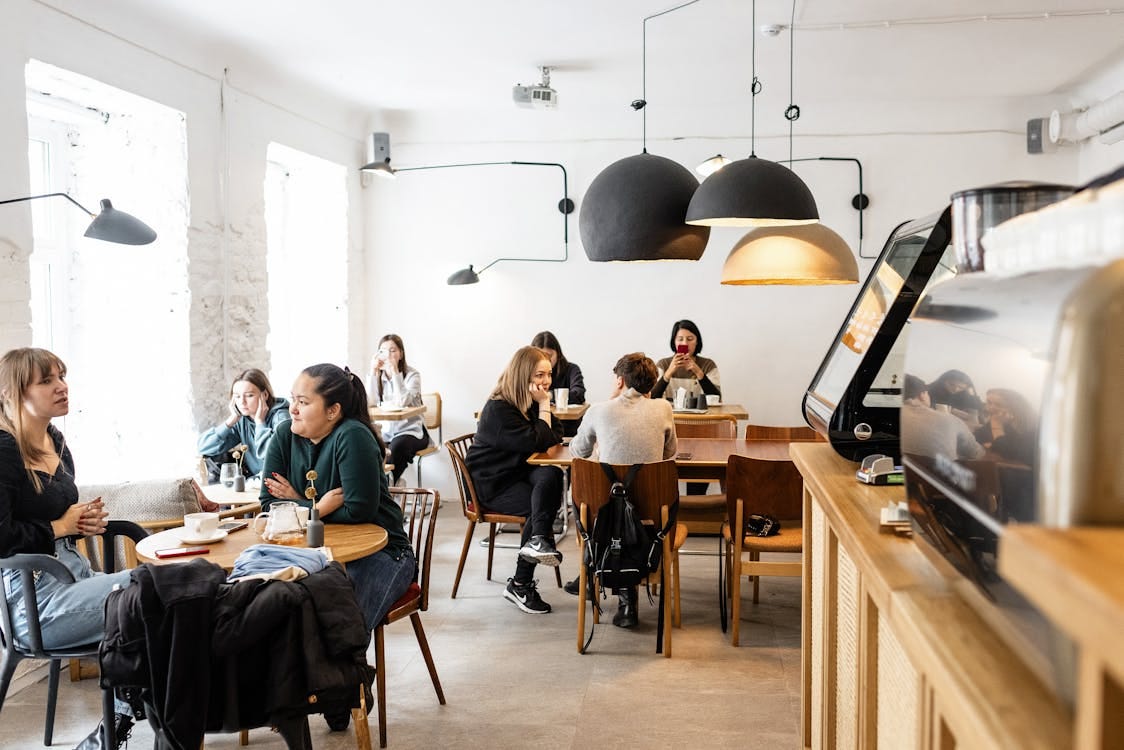
I was catching up with someone who runs a very smart media agency yesterday - and the first thing she told me was “we’re knocking down that wall next week”.
They’ve got a lovely office space in central London, and they’ve got the opportunity to take over the space next door too. Because they’re not big enough yet to fill the seats, they’ve invited friends in to their space. Complementary and adjacent people.
It’s not a network, they’re not building a monolithic full service agency, they’re not creating some sort of coalition. Just friendly folk sharing a space.
It got me re-excited about the possibility of shared spaces, and what might happen with you have a bunch of interesting people in the same room.
It reminded me of when I ran an agency, where we also shared a space with other businesses, where just being in the presence of other great people, enabled a whole load of interesting and surprising collaborations. From the smallest of “have you got five mins to give me feedback on something” to longer, larger and substantial projects together.
That was back in 2005-ish (yes, i’m old) - but the idea has stuck with me for years, and flash forward 20 years to 2025-ish, and when thinking about the amount of random empty space in under-utilised offices and agency buildings - I wonder what better could be done to re-create such fertile environments for ideas to spark and collaboration to be nurtured, along with shared resources and infrastructure.
What might happen when you bring together collections of independent businesses in the same space, or bigger businesses show a welcoming attitude towards freelancers between contracts, inviting us in to their space for the day, for the week, when needed. Not employees forced into an office space, not a soulless coworking space, but fellows with intention to connect, and openness to serendipity.
There’s a fair amount of research which shows the importance of in-person presence to foster positive collaboration and outcomes, and our recent research also shows the importance of meaningful time together for mental health too.
Maybe it just all starts with creating reasons to come together more often.
» If you’re in London, consider joining Monday’s Insights & Strategy Coworking Day, hosted by Ramona Daniel. Details here.
#CuriosityStreamLIVE - The dotLLM era?

Our first huddle of the year - Ged Carroll, brand and creative strategy director and member of Outside Perspective, will be presenting his take on the impact of AI, summarising his recently published paper “The dot LLM era?”.
As a technology, LLMs are making lasting changes from business to culture, but what economic risks do they pose and will that risk stop them dead in their tracks? He’ll be walking us through his thinking, and a group discussion around the themes it raises.
We’re huddling on Tuesday 27 January, 1pm GMT.
Free for Outside Perspective members.
» Sign up at https://luma.com/vbez0841
In Recess - A conversation with Jody Orsborn Medina

Jody is an Experiential Creative Director who has worked both in-house and independently with clients including Intel, Google, Shopify and Canva. She’s also the host of RECESS, an online gathering bringing creatives, designers and strategists together to share what’s currently inspiring them in the world. She also releases a yearly free-to-download Creative Playbook featuring tips, tricks and insights from global creatives.
Tell us a little bit about RECESS. What is it, and why are communities for creative folk so important?
RECESS started as a way to connect people. During the pandemic, I was the Executive Creative Director at a WPP agency, working remotely, and it quickly became clear how isolating creative work could feel when everyone was stuck behind screens.
I began hosting internal RECESS LIVE sessions as a space to step outside of current client work, share inspiration, and bring the team together. At the sessions, colleagues would share two projects/ campaigns and/or designers that really excited them in the industry. The only rule was that it couldn’t be something they worked on, but shining the light on others.
When I went freelance, I really missed the RECESS sessions and found that I craved a sense of community even more. Working solo intensified that feeling of isolation, so I restarted RECESS as an open platform anyone could join, designed to connect like-minded creatives across the industry.
At the same time, I realized how important it was to establish my own voice as an independent creative. Before freelancing, I was “Jody from the agency,” or earlier, “Jody from The Backscratchers” when I ran a business in London. Suddenly, I was just… Jody.
RECESS became a way to build something that reflected what I cared about, gave me a genuine reason to reach out to people I admired, and helped me form meaningful connections. It became my calling card.
It’s also opened up the world for me. When I travel, I’ve met people who’ve contributed to RECESS or downloaded the Playbooks in places like Mexico, Hong Kong, Vietnam, and the UK. I even got my first tattoo in South Korea, inspired by a RECESS contributor who encouraged me to do it and introduced me to her tattoo artist.
That spirit defines RECESS today: a global creative community and inspiration platform centered on sharing ideas, supporting one another, and staying curious.
What prompted the Creative Playbook, and what can people expect to see in this year’s report?
The Creative Playbook grew directly out of the conversations happening at RECESS LIVE events. As the sessions evolved, a friend said, “I love attending these events, but I want to know where the creatives are finding the projects they’re talking about.” That question stuck with me.
I created a questionnaire to ask just that, sent it out, and it became the first version of the Playbook: 80 pages in 2024. By 2026, it’s grown to over 220 pages.
The Playbook is my way of capturing those honest answers in one place. It isn’t about theoretical frameworks or trend forecasts, but the real tools, resources, and habits that help creatives stay inspired and adaptive.
The 2026 edition brings together insights from 48 creatives across more than 20 countries, spanning disciplines, career stages, and geographies. Inside, you’ll find curated recommendations for books, podcasts, tools, newsletters, industry events, and creative rituals, alongside reflections on topics like AI in creative workflows, analog practices, and managing creative energy.
It’s designed to be practical, browseable, and human — something you can return to whenever you feel stuck, curious, or ready to shake up how you work. Dip into what’s useful now, and come back to the rest later.
I love that your approach to the Playbook is a curated take from multiple people rather than a singular view. What opportunities do you think brands can find from tapping more into creative community spaces?
I’ve learned so much from the people involved in the Playbook. We have contributors from 20 countries, ranging from junior designers to CCOs, and there’s real value in seeing both the patterns that emerge across the industry and where things diverge.
A designer’s Instagram feed in Hungary looks completely different from a strategist’s in Japan. I love seeing what’s hyper-local, what inspires people day to day, and what transcends borders.
For brands and agencies, there’s a huge opportunity in listening to the honest conversations creatives are having about the current state of the industry and what’s driving creativity right now.
Across the Playbook, themes like slow creativity, embracing imperfection and handmade work, and the renewed power of live, in-person experiences came up again and again.
Brands that tap into these desires, offering real connection, hands-on moments, and meaningful IRL experiences, are the ones that will truly resonate and connect with the current creative zeitgeist.
» Take a look at the 2026 Creative Playbook here.
Meet a Member: Christopher Haywood
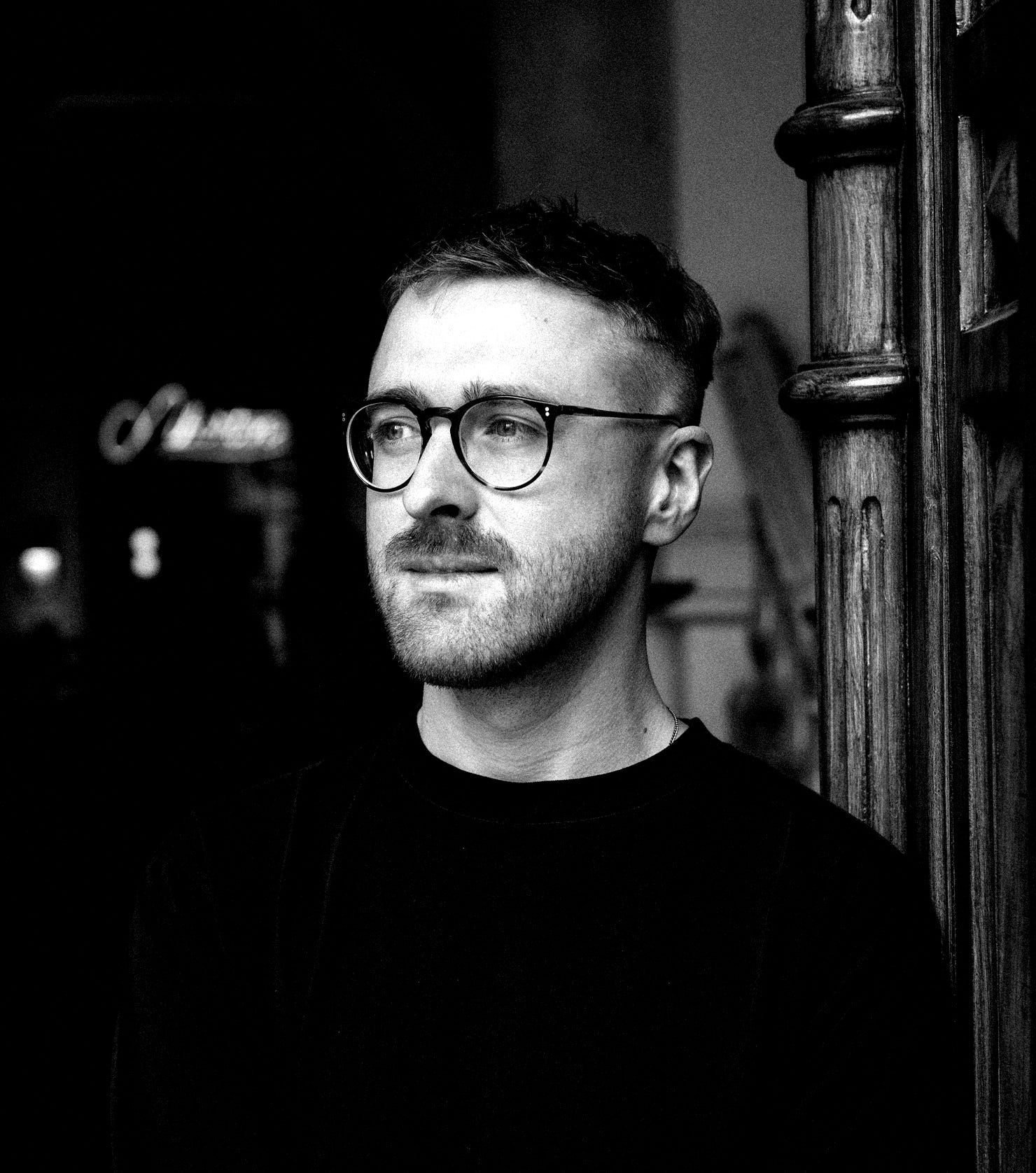
Each week, we aim to profile a new member of the community, so you can get to learn a little more about your fellows. This week, we spoke to Christopher Haywood, a lifecycle marketing strategist who’s racked up close to a decade’s worth of experience working brand-side across the B2B and B2C space.
Hi, I’m Christopher
The backstory: Just moved back to the UK after ~10 years in Barcelona. Now splitting time between Bristol and London. It's -4 outside. Pray for me.
What I've done: Spent most of my career in-house leading lifecycle programs — including at Vistaprint and TravelPerk (now Perk).
What I do now: I run one-over-four — a lifecycle micro-agency working with B2B and DTC brands. My sweet spot is teams where demand is already coming in, activity is high, but the value from that activity isn't scaling as cleanly as it should. Acquisition's working but it feels leaky, or growth is happening but efficiency isn't keeping pace further down the customer lifecycle.
What I'm useful for: For anything lifecycle-related (from first touch through to onboarding, activation and retention), happy to jump in where helpful. Brains available for picking. :brain:
A recent piece of work I’m proud of
I’ve recently been finishing up work on the UK launch of a B2B energy tech product at Voltalis, as part of a wider £1bn investment into expanding the business internationally.
My role was to take ownership of the go-to-market and customer journey end-to-end — from early demand generation through to onboarding and retention — with a focus on proving there was a real audience for the product and making sure early traction didn’t fall apart after the first conversion.
What was most interesting was resisting the usual launch instinct to add more channels and activity. Instead, we focused on tightening what already existed: clearer targeting, stronger follow-up, and treating onboarding and lifecycle as core growth levers from day one, rather than things to “fix later”.
The outcome was a much leaner, more predictable setup — better conversion from existing demand, stronger early engagement, and a growth engine the team could actually run, measure, and improve without constant firefighting.
I’m proud of the work because it reduced waste rather than adding noise, and left the business in a calmer, more sustainable position — which is exactly what’s needed when the stakes (and the investment behind them) are that high.
My outside perspective is…
Lately I’ve been thinking about how often teams reach for visible tactics when the underlying problem is pressure elsewhere in the system.
A good example is the growing number of SaaS brands running Black Friday offers. Not because discounts are always wrong — but because, in practice, those decisions rarely come from a clear strategic insight.
They usually surface when growth starts feeling heavier than it should. CAC creeps up. Deals take longer to close. Activation feels slower. Retention softens at the edges. Nothing’s obviously broken, but the whole machine requires more effort to produce the same results. And at some point, “we could always do something for Black Friday” becomes an option.
What interests me is that the discount itself is rarely the real lever. More often it’s a signal that something earlier in the journey isn’t doing its job — value not landing quickly enough, onboarding not quite sticking, lifecycle lacking clear ownership.
That tension is what’s occupying my head right now: how often teams choose short-term relief over fixing the quieter, structural things that would make growth feel calmer and more predictable in the long run.
Three things I’m currently consuming
Explore: As I said, I've moved back to the UK after nearly 10 years in Barcelona and I’m enjoying getting to know the South West properly. I surf when I can and have been spending a lot of time along the coast. It’s been fun to see how much decent nature there is here — even in winter. Very ready for spring though.
Listen: Listening to The Rich Roll Podcast - I’ve been dipping in and out of Rich Roll’s Best Of 2025 episodes. I like the pace of his conversations and the fact he lets people think out loud, rather than pushing for soundbites. Easy listening on walks or while cooking.
Read: Reading Karl Ove Knausgård - I’ve just started his latest novel. It’s observational, slightly funny, and slow in a way I’m enjoying at the moment — long, detailed, and very much a book for people who don’t mind spending 20 pages on something completely mundane (iykyk).
» Connect with Christopher on Linkedin or via the community
Curiosity Stream

» zoe‘s 2026 redux of “so you want to be a strategist”

» Ged’s Dot LLM era paper, which is the subject of our upcoming huddle
» Manifest on Eat the Future
» Taking wierd ideas seriously via Packy McCormick
» Pessimism as economic issue (thanks Joel)
» APG Canada drops it’s spring semester of training (thanks Michelle)
» LinkedIn Post Analyzer - helpful! (thanks Ramona)
» Toby on one year of his agency Little Vienna
» I just stumbled across BBC Pidgin
» StratMonday next week on Ethnography and LATM
» Common Strategies and School of Critical Design are running another Semiotics for Future impact event in April
Opportunities.
+ Lucinda Bounsall has an open call for Post-Culture by Sibling Studio contributors. More here.
+ Amy Daroukakis is looking for people to join Culture Connectors. More here.
+ Craft are looking for Comms Planning Directors, both freelance and perm.
And you might have missed a few opportunities from our friends at Koto, Across the Pond, Twin and Creative Equals this week - which closed quickly. Best to keep up to date on our real-time posts here
» Web
» Telegram
» Whatsapp
+ and of course, our slack channel if you’re a community member.
That’s all for this week.
mk✌️
Great read. The agency coworking setup from 2005 sounds like it had something special that we've lost in the fully remote / antiseptic WeWork era. I ran a small design shop pre-pandemic and the random hallway collisions with other creatives genuinley led to better work than scheduled collaboration ever could. Curious if the renewed focus on intentional colocation will stick or if its just post-COVID pendulum swing before we all retreat back to our home offices.